
Vehicles form the backbone of transport systems. Various modes of mobility exist to cater to the ever increasing demand in countries. Vehicular emissions account for a major chuck of the emissions in India owing to the fuels used to run them. The share of transport-based emissions increased from 14.6% in 2005 to 17.8% in 2015 and it contributed to a release of 245 million tonnes of CO2 in the atmosphere in 2015.
India’s Nationally Determined Contributions envision developing safe, smart and sustainable green transport as key means of limiting greenhouse gas emissions in India.
Promoting the deployment of cleaner fuels, improving emission standards for vehicular pollution, putting in place standards for fuel economy performance and transitioning to electric mobility are central to successfully transitioning to a more sustainable, less emission-intensive transport system in India. Transitioning to cleaner modes of transport can also have immense health benefits owing to the reduction in air pollution caused due to tailpipe emissions of traditional fuel-based vehicles.
30-35%
Contribution of vehicles to PM 2.5 emissions in India
USD 20 Billion
Health damages attributable to transportation in India (2015)
88%
Of total emissions from the transport sector attributable to road transport in India (2015)
Shakti Sustainable Energy Foundation works towards promoting research on the electric mobility ecosystem in India, developing roadmaps that can help existing enterprises adopt cleaner fuels and supporting policies that encourage the adoption of sustainable vehicles and fuels in the country.
Search Our Work

Improving the Fuel Efficiency of Vehicles
Sector: Sustainable Transport Undertaken By : Centre for Science and Environment, PricewaterhouseCoopers Recent Publication: 2021Deteriorating air quality in Indian cities is a growing and serious concern. A major cause of this is the increasing emissions from the rapidly growing transport sector. Substantially improving vehicle efficiency has the potential to reduce emmissions as well as enhance energy and enrionment security.

Electrification of Urban Freight in India
Sector: Sustainable Transport Undertaken By : The Energy and Resource Institute Recent Publication: 2021Urban freight movement forms a fundamental part of the overall transportation supply chain. Movement of goods originating from or outside the urban periphery which enter into an urban area through commercial road vehicles forms the urban freight network. Such movement is usually catered by both light commercial vehicles (LCVs) and medium and...Read more
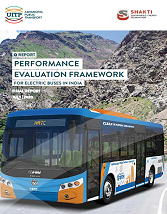
Informing the Design of FAME II
Sector: Sustainable Transport Undertaken By : Union Internationale des Transports Publics (UITP – India) Recent Publication: 2020The Government of India rolled out Phase-II of FAME Scheme with an outlay of Rs. 10,000 Crore for a period of 3 years commencing from 1st April 2019. The FAME II scheme is aimed at incentivising demand for electric vehicles, especially electric buses, 2- and 3-wheelers and 4-wheeler passenger cars. In order to successfully implement the roll-out...Read more

Economic Implications of E-Mobility Transition in India
Sector: Sustainable Transport Undertaken By : Council on Energy, Environment and Water Recent Publication: 2020Globally, the electric mobility transition is underway driven by concerns around energy security, climate change and local air pollution. While India is increasingly looking at electric mobility as a viable mode of transport, the e-mobility transition in India is yet to take-off in a full-fledged manner. In 2017, less than 0.1% of the 21 million...Read more
Charging Infrastructure for the Electric Vehicle Segment
Sector: Sustainable Transport Undertaken By : Alliance for an Energy Efficient Economy Recent Publication: 2020There is growing interest amongst Indian policy makers to encourage EV based mobility in cities and phase out ICE vehicles running on traditional fuels in order to reduce the carbon footprint of the economy. One of the key components of an electric vehicle (EV) ecosystem is a robust charging infrastructure. But storage technology is still in its...Read more