
India is a rapidly developing nation. While a major proportion of its population continues to live in rural areas, a demographic shift towards urban spaces is fast taking place. The number of urban spaces in India increased from 5,161 in 2001 to 7,935 in 2011 and continues to grow steadily. Urban areas offer better opportunities for economic prosperity and better access to resources, making them the preferred choice of a growing number of people.
However, the increasing population in cities also puts a strain on the resources of the city, leading to congestion and urban sprawl as well as pollution. In order to sustainably meet the demands of a growing number of people, cities need to allocate resources carefully and rely on cleaner sources of energy to power their economic activities. Cities also need to be planned efficiently in order to accommodate not only the present-day populace inhabiting them and also anticipate future demand and provide for it.
Transport is one of the first sectors to be impacted by an increase in demand in the urban space. Growing numbers in cities translate into a heavier load on the public transport systems in the city. If the public transport infrastructure is not strong enough to meet the demand, it leads to an increase in private vehicles which leads to greater congestion on the roads and leads to a lack of parking spaces. As the urban spaces in India continue to grow and expand, the country must look towards building sustainable transport systems that can contribute to cleaner and more efficient towns and cities.
230 million
registered vehicles in India (as on March 31, 2016)
8-fold
Increase in travel demand since the 1980s
$22 billion
Collective congestion costs borne by Delhi, Mumbai, Kolkata, and Bengaluru
Sustainable transport focuses on developing transport systems that integrate better urban public transport systems and non-motorised transport, land-use planning and transit-oriented development, in cities. Shakti Sustainable Energy Foundation works to promote policies that pave the way for the adoption of such systems.
Search Our Work
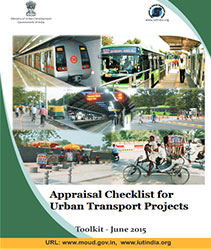
Appraisal Checklist for Urban Transport Projects
Sector: Sustainable Transport Undertaken By : Institute of Urban Transport Recent Publication: 2015Shakti supported the development of an evaluation criteria based on which transport projects can be evaluated for compliance with principles of sustainable transport and then funded accordingly.