
Transportation is a basic human need. As our cities evolve and grow, our dependence on transportation increases. The transport sector accounts for 24% of the energy consumed by all the sectors in the country (TEDDY, 2018). It is also one of the fastest growing sectors. As our economy grows and incomes increase, the demand for transport is set to increase too. It is important that this increased demand is met with a clean and sustainable transport supply. The right policy interventions can help create a transport sector that can cater to the demands of its consumers while being environmentally sustainable.
India’s Intended Nationally Determined Contributions lay emphasis on safe, smart and sustainable green transport as key means of limiting greenhouse gas emissions in India. Greening the transport sector requires policy interventions that support clean fuels, mass transit and non-motorised modes of transport as the key drivers of change.
87%
of transport sector emissions come from road transport
Source: TEDDY, 2018
14%
of energy-related CO2 emissions in 2010 came from transport
Source: Low Carbon Transport in India
95%
of the Indian transport sector’s demand for fuel is met by petroleum-based derivatives
Source: Shakti report
Indian cities are increasingly in the thrall of air pollution and road congestion. This trend will continue to see an upward spike as the number of vehicles on our roads’ increases. The combustion of fuels used in vehicles is a major contributing factor to pollution. This pollution is attributable both to the rise of private vehicle ownership and the increased use of road-based freight transport. Countering it with increased use of public transport systems, greater land-use planning and the adoption of vehicles and modes of transport that use cleaner and more efficient fuels can not only reduce congestion but also cut down air pollution drastically.
Our work at Shakti Sustainable Energy Foundation focuses on reducing emissions from road-based transport, which accounts for the highest share of emissions in the sector. We facilitate interventions in the transport sector by supporting the design and implementation of policies for better transport in cities, improved vehicle and fuel efficiency and energy efficient freight, and by supporting research that can accelerate the electric mobility transition in India.


Vehicles form the backbone of transport systems. Various modes of mobility exist to cater to the ever increasing demand in countries…
Know more
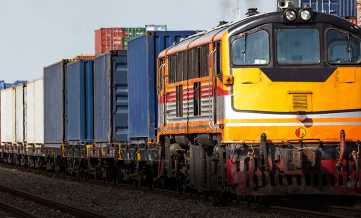
Search Our Work
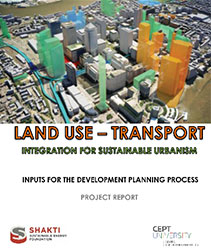
Promoting Integrated Land Use-Transport Planning
Sector: Sustainable Transport Undertaken By : Centre for Environmental Planning and Technology (CEPT) Recent Publication: 2015Land use policies and development control regulations adopted by a city have a significant impact on its mobility patterns. Development plans that limit population densities within city boundaries by imposing limits on built up areas, cause city to sprawl to accommodate the land requirements of a rapidly growing city population.
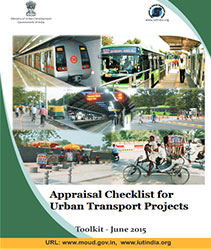
Appraisal Checklist for Urban Transport Projects
Sector: Sustainable Transport Undertaken By : Institute of Urban Transport Recent Publication: 2015Shakti supported the development of an evaluation criteria based on which transport projects can be evaluated for compliance with principles of sustainable transport and then funded accordingly.

Fuel Efficiency Improvements in Heavy Duty Vehicles (HDVs) in India
Sector: Sustainable Transport Undertaken By : The Energy and Resource Institute Recent Publication: 2015Heavy Duty Vehicles (HDVs) comprise only 8 percent of the total vehicle fleet in India but consume nearly 38 percent of the total diesel consumed in the country and contribute approximately 60 percent of the total carbon dioxide emissions from the transport sector. Given that the HDV sector will grow massively in the next few years, Shakti is...Read more

Bus Fuel Efficiency through Fleet Inspection and Maintenance Practices
Sector: Sustainable Transport Undertaken By : Cambridge Systematics Consulting and Technology Pvt. Ltd. Recent Publication: 2015Bus fuel efficiency can be improved by detecting and replacing old and worn bus components that are responsible for more fuel consumption and higher emissions. This is best done through a preventive maintenance regime for bus fleets which includes planned inspection and maintenance activities.
Bus Fuel Efficiency Improvement through Fleet Driver Training
Sector: Sustainable Transport Undertaken By : SGArchitects Recent Publication: 2015The fuel consumption of a bus depends on both technical and operational parameters such as vehicle design, driver behaviour, maintenance practices, road conditions and traffic patterns. From these, the quickest and the most cost-effective way to achieve better fuel efficiency, particularly in case of existing fleets, is through improved driver...Read more