
Access to reliable sources of energy is a central component of development. Raising the standard of living requires access to energy sources that can support and enhance the functions of daily life. The Saubhagya scheme of the Indian government has succeeded in connecting almost 100% of households across the country to the power grid. However, large portions of the population continue to lack access to clean and reliable energy sources of energy. Grid connectivity does not ensure a steady supply of electricity owing to various infrastructure challenges.
Access to clean, secure and reliable energy is necessary to power some of our central human needs — farming, education, and physical well-being. Cooking using traditional biomass combustion fuels can lead to household air pollution, which in turn poses a public health challenge. Access to clean cooking energy can combat this issue as well as reduce the amount of time spent in the kitchen by women, thereby allowing for time to be invested in education, leisure, and other productive activities. The Pradhan Mantri Ujjwala Yojana has helped many households gain access to cleaner cooking fuels like LPG. The KUSUM scheme has connected a large population of farmers to off-grid solar pumps in rural areas and reduced the dependency on the electricity grid in grid-connected areas, thereby increasing stability and improving farmer incomes. Health and education infrastructure in rural areas can also benefit immensely from the introduction of decentralised renewable technologies by ensuring access to a reliable energy supply that can allow rural institutions to expand their capacities and introduce more energy-intensive but useful technologies into their operations.
Decentralized renewable energy is the most viable solution to the problem of electricity supply. DRE solutions can provide 24×7 clean, reliable and quality energy supply even in hard to reach regions, and reap benefits in terms of better health, education and economic growth.
81%
of rural Indian households continue to rely on biomass for cooking
80%
of rural households depend on grid electricity and solar technologies for their primary lighting needs
55%
of India’s net sown area remains unirrigated owing at least partially to unreliable power supply
Shakti Sustainable Energy Foundation seeks to promote policy, regulatory and institutional interventions to promote decentralized renewable energy (DRE) based solutions. Shakti works to strengthen the reliability of the distribution grid as well as to enhance the capacity of key stakeholders such as state and district-level energy development bodies, financial institutions and rural energy service entrepreneurs working in the DRE space. Shakti also engages in knowledge sharing and partnership building through multi-stakeholder initiatives such as Clean Energy Access Network (CLEAN).
Search Our Work
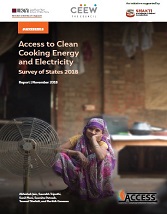
Access to Clean Cooking Energy and Electricity - Survey of States 2018
Sector: Clean Power Undertaken By : Council on Energy, Environment and Water Recent Publication: 2018In 2014-15, Shakti supported the launch of an energy access survey, 'Access to Clean Cooking Energy and Electricity - Survey of States', for six major Indian states – Uttar Pradesh, Bihar, Jharkhand, Madhya Pradesh, Odisha, and West Bengal. The framework used for the survey framework that was inspired by the multi-tier framework (MTF) proposed...Read more
Evaluating Investment-Policy Interaction in the Mini-Grid and DRE sectors
Sector: Clean Power Undertaken By : cKinetics Recent Publication: 2018India has seen progressive developments on the DRE and mini-grid policy front. But have these policies led to an increased quantum of finance or better access to it? What is the investor perception of these changes? Studies commissioned by Shakti attempt to provide some answers by assessing the nature and form of finance available along with...Read more
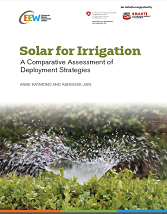
Towards Solar-Powered Agricultural Water Pumps
Sector: Clean Power Undertaken By : Multiple Recent Publication: 2018Agriculture contributes to 15% of India’s GDP and employs 50% of the workforce. Reliable irrigation, therefore, is a critical requirement not just for the farmer but also for the country. Solar irrigation pumps are a promising alternative to traditional water pumping systems which usually operate on grid electricity, diesel and kerosene. Given...Read more
Scaling up Mini-Grids
Sector: Clean Power Undertaken By : Multiple Recent Publication: 2017It is estimated that around 237 million Indians remain unconnected to the discom grid and do not have access to reliable electricity. In the last few years, DRE-based mini-grids have emerged as an effective solution to provide clean and reliable power using locally available resources. On the policy front, mini-grids have been gaining prominence...Read more

Improving Finance for Clean Energy Access in India
Sector: Clean Power Undertaken By : Intellecap Advisory Services Pvt. Ltd. Recent Publication: 2017Decentralized Renewable Energy (DRE) enterprises have immense potential to meet India's energy needs, particularly in rural areas. Shakti facilitated the development of a multi-approach programme to enhance access to finance for DRE enterprises by : providing technical assistance services to DRE enterprises and financial institutions, designing...Read more
- Alternate Financing Facilities
- Alternate Financing Facility for Energy Access in India
- Framework for the Monitoring and Evaluation of DRE enterprises
- Decentralized Renewable Energy Evaluation and Monitoring Tool (DREEM) tool
- Monitoring and Evaluation Framework For Off-Grid Enterprises in India – DREEM Tool