
Energy in the form of electricity fuels economic growth. India has a 1.3 billion strong population. This coupled with an increased push for indigenous development means that India’s power demand is set to rise manifold over the coming decades. Projections forecast a rise in demand from approximately 949 terawatt-hours in 2015 to between 2074 terawatt-hours to 2785 terawatt-hours by 2030.
India’s demand for power comes from diverse sectors including industries, residential and commercial buildings, agriculture, rural and urban infrastructure, transport, among others. But it is important that the demand for electricity not be looked upon in isolation. The energy sector accounts for the highest carbon emissions in India. We must meet the rising demand with clean sources of power in order to promote energy security and climate stability.
The opportunity to meet India’s power demands with cleaner energy options has never been brighter. India’s target of achieving 175GW of renewable energy capacity by 2022 and 430GW by 2030, backed by policy and regulatory pushes, has put India among the top countries for its renewable energy efforts . The Saubhagya scheme has succeeded in connecting almost all Indian households to the electricity grid . The Indian government is committed to achieving the Nationally Determined Contributions as part of the Paris Climate Agreement as well as ensuring year-round energy access to all its citizens.
365 GW
Total installed power capacity in India
83GW
Total installed solar capacity in India
1096 GW
Total estimated potential for renewable power generation in India
The challenge today is to ensure that every person has access to clean and reliable power. This includes working with diverse stakeholders such as distribution utility companies, power generation companies, industrial and agricultural players, urban and rural consumers, and policymakers to ensure a clean and equitable power supply system for all.
Shakti Sustainable Energy Foundation’s work in the power sector supports the development of policies that help integrate a greater capacity of renewable energy in India’s power mix, enhance the state of play of the distribution sector, and ensure that all households in the country are provided with reliable electricity round the clock.

Sustained economic growth places an increased demand on energy resources, energy systems and infrastructure. Domestic energy demand is expected to double by 2040 with electricity…
Know more

Traditionally, electricity is generated through power sources and supplied to consumers via the power grid. Distribution utility companies, also known as discoms, supply this…
Know more
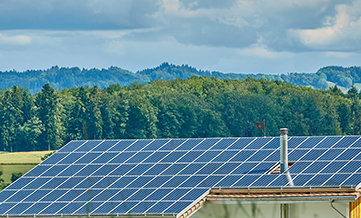
Access to reliable sources of energy is a central component of development. Raising the standard of living requires access to energy sources that can support and enhance the…
Know more
Search Our Work

Innovative Approaches Towards Demand Side Management
Sector: Clean Power Undertaken By : MP Ensystems Advisory Private Limited Recent Publication: 2018The Indian regulatory framework supports the design and implementation of Demand Side Management (DSM) measures by utilities, for their consumers. DSM regulations have been notified by 19 states and Union Territories in India and a number of DSM programs have been initiated across the country. To support the implementation of DSM in India,...Read more
Impact Evaluation for End-Use Efficiency Programs
Sector: Clean Power Undertaken By : Prayas (Initiatives in Health, Energy, Learning and Parenthood) Recent Publication: 2018Energy efficiency will be crucial to meeting India’s goal of providing reliable, affordable and sustainable access to energy to its citizens. A number of policies and programmes aimed at conserving energy, improving energy efficiency, and managing energy demand have been implemented in India in recent years. Both the scale and the scope of...Read more
New and Innovative Sources of Finance for Renewable Energy
Sector: Clean Power Undertaken By : Climate Policy Initiative Recent Publication: 2018India is pursuing an ambitious goal — significantly expanding the share of renewable sources in its energy supply mix. There is a widespread recognition that financing for renewable energy must be scaled up significantly from its current levels. Going forward, India will have to efficiently and effectively mobilise further financial resources...Read more
Addressing Data Gaps Through a Knowledge Portal for the Renewable Energy Sectorp address data gaps
Sector: Clean Power Undertaken By : World Institute of Sustainable Energy Recent Publication: 2019India’s renewable energy market has gained increased momentum, stoked by an ambitious target of 175 GW of renewable energy by 2022. But stakeholders still face challenges accessing data on the renewable energy sector. This is because information on major trends, growth trajectories, policy and regulatory reforms, market updates, and bottlenecks...Read more
Large-Scale Grid Integration of Renewable Energy
Sector: Clean Power Undertaken By : Multiple Recent Publication: 2018Traditionally, the electricity generation in India has been dominated by conventional fuels. With the increasing focus on clean growth, India plans to incorporate a total of 175 GW of renewable energy installed capacity by 2022. This is expected to be account for around 37% of the installed power generation capacity in 2022. The successful...Read more