
Energy in the form of electricity fuels economic growth. India has a 1.3 billion strong population. This coupled with an increased push for indigenous development means that India’s power demand is set to rise manifold over the coming decades. Projections forecast a rise in demand from approximately 949 terawatt-hours in 2015 to between 2074 terawatt-hours to 2785 terawatt-hours by 2030.
India’s demand for power comes from diverse sectors including industries, residential and commercial buildings, agriculture, rural and urban infrastructure, transport, among others. But it is important that the demand for electricity not be looked upon in isolation. The energy sector accounts for the highest carbon emissions in India. We must meet the rising demand with clean sources of power in order to promote energy security and climate stability.
The opportunity to meet India’s power demands with cleaner energy options has never been brighter. India’s target of achieving 175GW of renewable energy capacity by 2022 and 430GW by 2030, backed by policy and regulatory pushes, has put India among the top countries for its renewable energy efforts . The Saubhagya scheme has succeeded in connecting almost all Indian households to the electricity grid . The Indian government is committed to achieving the Nationally Determined Contributions as part of the Paris Climate Agreement as well as ensuring year-round energy access to all its citizens.
365 GW
Total installed power capacity in India
83GW
Total installed solar capacity in India
1096 GW
Total estimated potential for renewable power generation in India
The challenge today is to ensure that every person has access to clean and reliable power. This includes working with diverse stakeholders such as distribution utility companies, power generation companies, industrial and agricultural players, urban and rural consumers, and policymakers to ensure a clean and equitable power supply system for all.
Shakti Sustainable Energy Foundation’s work in the power sector supports the development of policies that help integrate a greater capacity of renewable energy in India’s power mix, enhance the state of play of the distribution sector, and ensure that all households in the country are provided with reliable electricity round the clock.

Sustained economic growth places an increased demand on energy resources, energy systems and infrastructure. Domestic energy demand is expected to double by 2040 with electricity…
Know more

Traditionally, electricity is generated through power sources and supplied to consumers via the power grid. Distribution utility companies, also known as discoms, supply this…
Know more
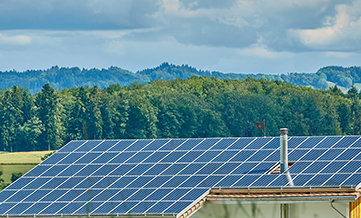
Access to reliable sources of energy is a central component of development. Raising the standard of living requires access to energy sources that can support and enhance the…
Know more
Search Our Work
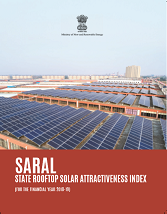
SARAL- State Rooftop Solar Attractiveness Index
Sector: Clean Power Undertaken By : Multiple Recent Publication: 2019India aims to achieve 175 GW of renewable energy capacity by 2022 of which 40 GW is slated to be generated through rooftop solar. The renewable energy segment as a whole (and rooftop solar as a sub-segment) is witnessing substantial interest from entrepreneurs, developers, potential investors, end users and government entities. SARAL is a step...Read more

Revitalising The Wind Energy Sector
Sector: Clean Power Undertaken By : Council on Energy, Environment and Water Recent Publication: 2019Wind energy contributes 60 gigawatts(GW) to India’s target of achieving 175 GW of renewable energy by 2022. However, in the last few years, the sector has witnessed an immense slowdown. The annual capacity addition of wind energy was below 2 GW for the last two consecutive years- a drastic 60 per cent decrease from the financial year 2016–17....Read more
India Energy Transformation Platform (IETP)
Sector: Clean Power Undertaken By : Center for Study of Science, Technology and Policy Recent Publication: 2019Launched in partnership with the Swiss Agency for Development and Cooperation (SDC), India Energy Transformations Platform (IETP) is IETP is an independent, multi-stakeholder group that meets periodically to discuss non-linear, radical and transformative opportunities for deeply decarbonizing India’s energy sector by 2050. IETP will...Read more
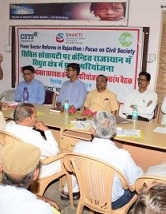
Enhancing Consumer Participation in Electricity Sector Decision Making in Rajasthan
Sector: Clean Power Undertaken By : Consumer Unity and Trust Society Recent Publication: 2019While India's power sector is evolving, public awareness and participation in electricity governance processes is quite limited. On the one hand, utilities must adopt initiatives that can influence consumer behavior, ensure quality of supply and profitability. On the other, consumers need to be aware of their rights, responsibilities, regulations...Read more
The State of Renewable Energy in India
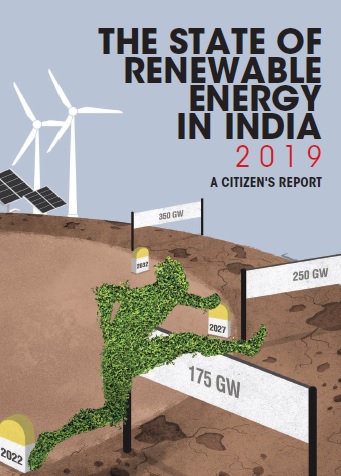
Sector: Clean Power Undertaken By : Centre for Science and Environment Recent Publication: 2019In the last decade the renewable energy sector has made tremendous strides in the country, growing from a fringe player to a mainstream actor in the energy sector. Riding on a favourable policy environment and dipping prices, capacity and generation have grown. According to official estimates, India has hit 73 GW of installed RE power, which is...Read more