
India’s industrial sector is an important contributor to the country’s economic growth, and it is set to grow in scale as the government pushes for greater indigenous manufacturing. Under the current ‘Make in India’ program the share of manufacturing as proportion of GDP is expected to increase from 16% to 25% by 2022 and create 100 million additional jobs in industry.
But while industries are a key facet of our country’s economic development, they are also extremely energy intensive. Most industrial processes continue to be powered by traditional fuels and the sector accounts for approximately one-fourth of India’s total greenhouse gas (GHG) emissions . Without efforts at decarbonizing the industrial sector, India will be not be able to meet its Nationally Determined Contributions under the Paris Agreement. Emissions from energy-use are a major factor in manufacturing related emissions with ~70% of industrial emissions between 2005-2015 coming from energy-use. Emissions from Industrial Processes and Product Use (IPPU) make up the remainder of industrial emissions. Reducing the energy intensity of key industrial sectors can result in a drastic decrease in emissions and improvement in air quality.
India has already taken several landmark measures to improve energy efficiency in the industrial sector. The Perform, Achieve and Trade (PAT) scheme is a market-based mechanism that allows entities in certain energy intensive sectors to earn energy saving certificates in lieu of energy saving beyond their targets, and trade them to companies that have failed to achieve their targets. The first cycle of the PAT scheme has been responsible for an energy saving of 8.67 mtoe.
26%
Emissions from manufacturing industries, construction, and industrial processes of India’s total CO2 emissions (2014)
42%
of India’s total fuel consumption in 2017
145 MTCO2 Eq.
Industrial sector energy savings due to energy efficiency in India (2000-2017)
Decarbonising our energy intensive industries and introducing more clean energy into their operations can help the country achieve its economic and environmental targets. Shakti Sustainable Energy Foundation engages with stakeholders in industry and key industry associations to mainstream energy efficiency and identify low carbon pathways in new infrastructure development. We also work with stakeholders to introduce energy efficient practices in India’s Small and Medium Enterprises sector.
Search Our Work

Decarbonising India’s Hard-to-Abate Manufacturing Sectors with Green Hydrogen
Sector: Energy Efficiency Undertaken By : Council on Energy, Environment and Water Recent Publication: 2021Between 2005 to 2012, the demand for primary energy from the industrial sector increased more than two-fold, primarily driven by the economic growth of the sector. But India's manufacturing sector continues to depend heavily on traditional, carbon-intensive fuel sources to meet its energy demands. The share of India’s industrial emissions in...Read more

Small and Medium Enterprises Energy Efficiency and Knowledge Sharing (SAMEEEKSHA) Platform
Sector: Energy Efficiency Undertaken By : The Energy and Resource Institute Recent Publication: 2020The Small and Medium Enterprises Energy Efficiency and Knowledge Sharing (SAMEEEKSHA) platform was set up to allow various stakeholders in the MSME ecosystem to pool and share the knowledge of institutions and key stakeholders that work towards promoting energy efficiency in India’s MSME sector. The website of the platform provides a more...Read more
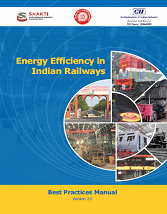
On the Right Track : Energy Efficiency in the Indian Railways
Sector: Energy Efficiency Undertaken By : CII-Sohrabji Godrej Green Business Centre Recent Publication: 2020Indian Railways is the one of the largest consumers of electricity in the country consuming over 17.5 billion units a year. As track and passengers continue to grow, implementing energy efficiency solutions and tapping into renewable energy is central to the Railway’s growth strategy. As a Designated Consumer under the Perform, Achieve and Trade...Read more
Low Carbon Pathways for India's Industrial Sectors
Sector: Energy Efficiency Undertaken By : Multiple Recent Publication: 2020Over the last two decades, India has experienced a dynamic transformation with rapid economic growth, urbanisation underpinned by a burgeoning population. These changes have intensified the demand and use of natural resources. Raising the living standards of the Indians through better infrastructure, housing and capital equipment, entails a high...Read more
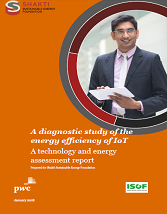
Energy Efficiency with Internet of Things (IoT)
Sector: Energy Efficiency Undertaken By : PricewaterhouseCoopers Recent Publication: 2018The Internet of Things, popularly known as IoT, is an emerging disruptive technology that transforms the way physical objects and assets operate and add value in any industry vertical. India has become a rapidly growing hub for IoT solutions. It is estimated that the Indian market for IoT is likely to touch USD 15 billion in the next five years....Read more