
Access to reliable transportation at affordable costs can go a long way in promoting the economic prosperity of a country. India’s economy is expected to grow rapidly in the coming decades and transportation demand is set to grow proportionately.
Transportation in India has historically been dominated by vehicles running on fossil fuels. These modes of transport contribute to air pollution and increase greenhouse gas emissions, and also increase India’s import dependence. India has been largely dependent on oil imports for its transportation fuel needs, and our fuel import costs have increased drastically, from INR 16.4 billion in 1981 to INR 869.46 billion in 2017-18.
Electric mobility can have positive impact on India’s macroeconomic position as well as the environment.
The transport sector accounts for 18 percent of total energy consumption in India with road transport being one of the highest emitting sub-sectors, contributing at once to air pollution and GHG emissions. A study conducted by IIT Kanpur in December 2016 found that in the national capital alone, vehicles account for 9 percent of PM10 emissions, 20 percent of PM2.5 emissions, 36 percent of the NOx emissions and 83 percent of the CO emissions.
Electric vehicles have no tailpipe emissions and therefore contribute significantly reducing air pollution. They also have a positive impact on noise pollution since they are quiet and make very little noise. While electric vehicles rely heavily on the electricity grid for their charging requirements, studies show that the emissions caused due to grid reliant EV charging are considerably lower than the emissions from their ICE counterparts. They are almost four times more energy efficient than ICE vehicles, which is a contributing factor in their low emission intensity. With the greening of the grid underway, this emission intensity is set to reduce further. As electric vehicles run on electricity as a fuel source, fuel dependence is reduced drastically which leads to improved energy security for India.
Concerns about charging infrastructure, capital costs, and range anxiety have hampered the swift adoption of electric mobility in India, but the situation is changing rapidly. Electrification is on the rise in India, especially in the 2-and 3-wheeler categories and amongst fleet operators. Favourable state and central policies and consumer incentives are aiding the process as are innovations in electric mobility technology which are reducing capital costs.
While electric vehicles have higher upfront costs, they are more cost-effective than ICE vehicles over their lifecycles. Electric vehicles have a lower operating cost, which benefits long range vehicles that see longer miles of travel in a day. They have only 25 to 30 moving parts as opposed to over 2000 moving parts in an ICE vehicle, thereby being more reliable, with fewer breakdowns, and therefore, resulting in low maintenance costs. Further with battery prices falling rapidly, electric vehicles are fast becoming cost-competitive with mainstream ICE vehicles.
30%
Targeted EV penetration by 2030 in India
4%
Reduction in GHG emissions if the 2030 target is achieved
31%
Reduction in oil imports if the 2030 target is achieved
Shakti Sustainable Energy Foundation works closely with the Industry, State Transport Undertakings (STUs), operators and policymakers at the national and state level to create policies that are supportive of an EV manufacturing ecosystem. We also house the Electric Mobility Initiative (EMI), a multi-funder effort that supports national and state level efforts towards accelerating electric mobility in India. Out work includes efforts to incentivize the adoption of EVs, especially hard to electrify vehicle segments such as heavy-duty vehicles (HDVs). We are working with distribution companies (Discoms) and different state and city agencies to support the creation of public, residential, curb side and workplace charging infrastructure. Lastly, we aim to generate accessible and consumer friendly information and increase awareness among stakeholders.
Search Our Work

Electrification of Urban Freight in India
Sector: Electric Mobility Undertaken By : The Energy and Resource Institute Recent Publication: 2021Urban freight movement forms a fundamental part of the overall transportation supply chain. Movement of goods originating from or outside the urban periphery which enter into an urban area through commercial road vehicles forms the urban freight network. Such movement is usually catered by both light commercial vehicles (LCVs) and medium and...Read more
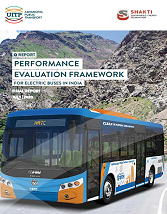
Informing the Design of FAME II
Sector: Electric Mobility Undertaken By : Union Internationale des Transports Publics (UITP – India) Recent Publication: 2020The Government of India rolled out Phase-II of FAME Scheme with an outlay of Rs. 10,000 Crore for a period of 3 years commencing from 1st April 2019. The FAME II scheme is aimed at incentivising demand for electric vehicles, especially electric buses, 2- and 3-wheelers and 4-wheeler passenger cars. In order to successfully implement the roll-out...Read more

Economic Implications of E-Mobility Transition in India
Sector: Electric Mobility Undertaken By : Council on Energy, Environment and Water Recent Publication: 2020Globally, the electric mobility transition is underway driven by concerns around energy security, climate change and local air pollution. While India is increasingly looking at electric mobility as a viable mode of transport, the e-mobility transition in India is yet to take-off in a full-fledged manner. In 2017, less than 0.1% of the 21 million...Read more
Charging Infrastructure for the Electric Vehicle Segment
Sector: Electric Mobility Undertaken By : Alliance for an Energy Efficient Economy Recent Publication: 2020There is growing interest amongst Indian policy makers to encourage EV based mobility in cities and phase out ICE vehicles running on traditional fuels in order to reduce the carbon footprint of the economy. One of the key components of an electric vehicle (EV) ecosystem is a robust charging infrastructure. But storage technology is still in its...Read more

Exploring Cost-Reduction Strategies For Electric Vehicle (EV) Batteries
Sector: Electric Mobility Undertaken By : Indian Council for Research on International Economic Relations Recent Publication: 2020Electric Vehicles (EVs) are viewed as a solution to several problems in India. Electric vehicles can contribute to reducing greenhouse gas emissions, sustainable economic growth, improving air quality, and reducing fossil fuel imports. However, the transition from a fossil fuel-based transport system to an electric mobility system faces a variety...Read more