
India holds the dubious distinction of being the second most polluted country in the world with regard to air pollution today. According to the World Health Organization (WHO), of the 10 most polluted cities in the world, 9 are in India. Domestic burning of solid fuels; dust from construction, roads, and other activities; burning of agricultural waste, industrial burning of coal and other fossil fuels; pollution from thermal power plants; brick production; vehicular emissions?; and use of diesel-powered equipment account for the most common sources of air pollution in India. Almost 84% of the Indian population lives in areas that exceed India’s own air quality standards while 100% of the Indian population lives in areas exceeding the healthy air quality standards set by WHO.
Air pollution is a widespread problem with far-reaching environmental, health and economic repercussions. Exposure to poor air quality is linked with increased hospitalizations, disability, and respiratory diseases[iv]. Unless prompt action is taken to curb air pollution, people’s exposure to PM2.5 is likely to increase substantially by 2050 as is the disease burden. The consequential economic ramifications of air pollution are also likely to worsen if the state of our air does not improve.
India is already taking steps to tackle this challenge. The National Clean Air Programme (NCAP), which was launched in 2019, has the potential to significantly improve air quality levels across cities by requiring the formulation and implementation of target-based clean air action plans. India’s push to ensure that all households have access to clean cooking fuels is another step in the direction of clean air. The increasing momentum towards cleaner modes of transportation as evinced by the recently adopted the BS VI norms and the push for electric vehicles can also help to improve air quality in Indian cities.
However, there is a lot that remains to be done. Most of our industries are still heavily reliant on emission-intensive processes and transitioning them to cleaner technologies is necessary. Data monitoring and modelling is a key aspect of improving air quality in India but improving infrastructure for this still requires work.
1.2 million
Lives lost due to air pollution (indoor & ambient) in India in 2017
122
Non-attainment cities identified by the NCAP
$560 billion
Losses incurred from air pollution in India between 1990 and 2013
Shakti Sustainable Energy Foundation is supporting efforts around air quality (AQ) modelling and monitoring, policy research, capacity building and public outreach -that are contributing to efforts building a stronger air quality management system in the country.
Search Our Work

Better Implementation of India’s Environmental Laws for Controlling Air Pollution
Sector: Climate Policy Undertaken By : Legal Initiative for Forest and Environment Recent Publication: 2016Over the years, the problem of air pollution has reached gigantic scale in India with many of the world's most polluted cities being located in India. The Air (Prevention and Control of Pollution) Act, 1981 was the first comprehensive legislative recognition of the problem of air pollution. There is a critical need to ensure that the Air Act is...Read more
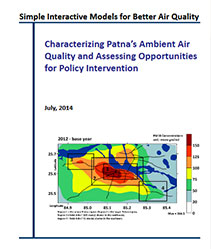
Ambient Air Quality Assessment for Patna
Sector: Climate Policy Undertaken By : UrbanEmissons.Info Recent Publication: 2014According to the World Health Organisation (2014), air quality in the city of Patna is among the top 100 cities with the worst PM10 pollution globally.Given the rapid development in Bihar and especially in the Patna region, it is necessary to introduce adequate measures for better air quality.