
Anthropogenic climate change is one of the greatest challenges of our times. Our climate reality is changing at a rapid pace right in front of our eyes. Heat waves have become more frequent over the past decades. The frequency of heavy precipitation events has increased over most areas. Sea levels are rising, and global average temperatures have increased noticeably . Rising carbon emissions from socio-economic activities that depend upon traditional, carbon-intensive sources of energy are largely at the heart of the challenge confronting our society today.
Rising emissions are not the only concern. Deteriorating air quality due to the release of hazardous pollutants from multiple sources is a growing challenge. Most Indian cities report poor levels of air quality, threatening the health of its citizens and adversely impacting economic activity.
India faces the dual challenge of reconciling its rapid economic growth with a pressing need to address climate change. Post its ratification of the Paris Agreement on Climate Change in 2016, India has invested considerably in domestic and international action to address climate change. The Nationally Determined Contributions (NDCs) committed to under the Paris agreement affirm India’s commitment to a low-carbon pathway for development. The NDCs set a clear signal for clean energy in reducing the emissions intensity of the Indian economy and recognise the importance of aggressively restoring forest cover. Achieving its NDC targets can help India achieve greater climate resilience as well as improve air quality standards while sustaining its economic growth.
11
of its 15 warmest recorded years witnessed in India since 2004
1·24 million
deaths in India were attributable to air pollution (indoor & ambient) in 2017
5.80%
Working hours projected to be lost in India by 2030 due to heat stress
Shakti Sustainable Energy Foundation’s Climate Policy programme supports several efforts to transition India towards a low-carbon pathway which can help mitigate climate change. We aim to foster sustained dialogue and engagement at the sub-national and national levels on climate and energy issues. We work to strengthen greenhouse gas (GHG) management capacities for informed policymaking. Over the last few years, our efforts have helped inform air quality monitoring in the country, assess mitigation options, and advance evidence-based research, stakeholder capacity building and outreach.

Climate change will have wide-ranging socio-economic impacts across demographics unless action is taken to mitigate it. Our current systems of economic development are largely carbon…
Know more

India holds the dubious distinction of being the second most polluted country in the world with regard to air pollution today. According to the World Health Organization…
Know more
Search Our Work

Domestic Climate Policy and Initiatives
Sector: Climate Policy Undertaken By : Institute of Financial Management and Research Recent Publication: 2015The challenge of climate change is often referred to the most defining issue of our time. In the last few years, India has announced several policies and programmes, including several national missions and state-level action, all of which have significant implications for India's abilities to meet its climate goals. Shakti is supporting research...Read more
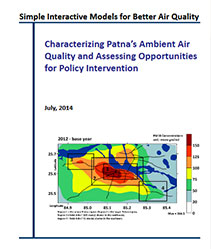
Ambient Air Quality Assessment for Patna
Sector: Climate Policy Undertaken By : UrbanEmissons.Info Recent Publication: 2014According to the World Health Organisation (2014), air quality in the city of Patna is among the top 100 cities with the worst PM10 pollution globally.Given the rapid development in Bihar and especially in the Patna region, it is necessary to introduce adequate measures for better air quality.