Energy Efficiency

India’s industrial sector is an important contributor to the country’s economic growth, and it is set to grow in scale as the government pushes for greater indigenous manufacturing. Under the current ‘Make in India’ program the share of manufacturing as proportion of GDP is expected to increase from 16% to 25% by 2022 and create 100 million additional jobs in industry.

But while industries are a key facet of our country’s economic development, they are also extremely energy intensive. Most industrial processes continue to be powered by traditional fuels and the sector accounts for approximately one-fourth of India’s total greenhouse gas (GHG) emissions . Without efforts at decarbonizing the industrial sector, India will be not be able to meet its Nationally Determined Contributions under the Paris Agreement. Emissions from energy-use are a major factor in manufacturing related emissions with ~70% of industrial emissions between 2005-2015 coming from energy-use. Emissions from Industrial Processes and Product Use (IPPU) make up the remainder of industrial emissions. Reducing the energy intensity of key industrial sectors can result in a drastic decrease in emissions and improvement in air quality.

India has already taken several landmark measures to improve energy efficiency in the industrial sector. The Perform, Achieve and Trade (PAT) scheme is a market-based mechanism that allows entities in certain energy intensive sectors to earn energy saving certificates in lieu of energy saving beyond their targets, and trade them to companies that have failed to achieve their targets. The first cycle of the PAT scheme has been responsible for an energy saving of 8.67 mtoe.


26%

Emissions from manufacturing industries, construction, and industrial processes of India’s total CO2 emissions (2014)

42%

of India’s total fuel consumption in 2017

145 MTCO2 Eq.

Industrial sector energy savings due to energy efficiency in India (2000-2017)

Decarbonising our energy intensive industries and introducing more clean energy into their operations can help the country achieve its economic and environmental targets. Shakti Sustainable Energy Foundation engages with stakeholders in industry and key industry associations to mainstream energy efficiency and identify low carbon pathways in new infrastructure development. We also work with stakeholders to introduce energy efficient practices in India’s Small and Medium Enterprises sector.

Search Our Work

Showing 6 to 10 of 10 entries

Guidebook for Designing an Energy Efficiency Insurance Product

Energy Efficiency Through ESCOs

Sector: Energy Efficiency Undertaken By : Multiple Recent Publication: 2017

The growing energy deficit coupled with fluctuating global energy prices has led to greater focus on energy efficiency. One of the most important ways to realize energy efficiency potential in industries is through Energy Services Companies (ESCOs), which implement energy efficiency projects though Energy Savings Performance Contracting....Read more

Factors Influencing the Uptake of Energy Efficiency Initiatives by Indian MSMEs

Making the Small and Medium Enterprises (SME) Sector More Energy Efficient

Sector: Energy Efficiency Undertaken By : Multiple Recent Publication: 2018

As engines of economic growth, Small and Medium Enterprises (SMEs) play an important role in India’s economy. SMEs contribute to around 45% of the country’s manufacturing output and are growing at a rapid pace. The energy savings potential from the SME sector is pegged at more than 15%. This could potentially translate to 3.5 Million ToE....Read more

energy efficient process in industries

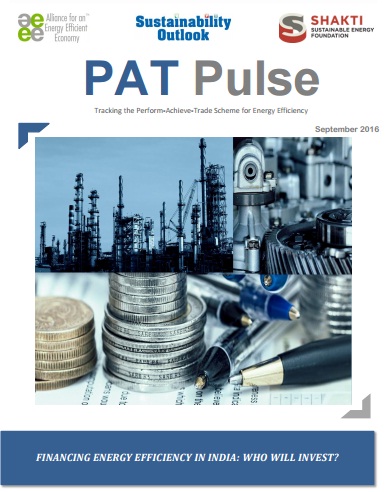
PAT Pulse: A Briefing Paper Series on the Perform, Achieve and Trade (PAT) Scheme

Sector: Energy Efficiency Undertaken By : Alliance for an Energy Efficient Economy Recent Publication: 2016

The Perform Achieve and Trade (PAT) scheme is a market-based scheme designed to encourage energy efficiency in energy intensive industrial subsectors. The first phase of the PAT scheme concluded in March 2015, and the second phase began in April 2016. This briefing paper series provides a comprehensive analysis of the PAT scheme, drawing from...Read more

energy efficient process in industries

Widening the Perform, Achieve and Trade (PAT) Scheme

Sector: Energy Efficiency Undertaken By : CII-Sohrabji Godrej Green Business Centre Recent Publication: 2013

Subsequent phases of the PAT scheme are expected to include new industrial subsectors based on their energy savings potential. This initiative, supported by Shakti, establishes energy consumption in select sectors and prioritizes them based on their energy saving potential. The following sectors are covered – Beverages, Chemicals, Dairy,...Read more

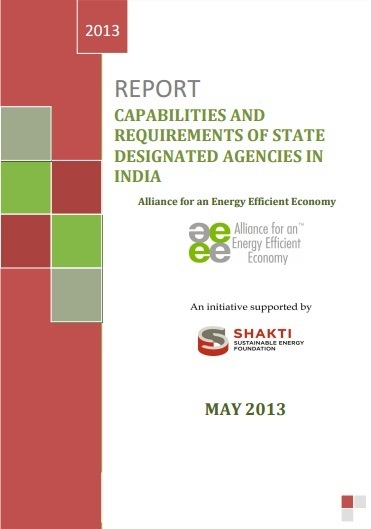
Capabilities and Requirements of State Designated Agencies in India

Strengthening Stakeholder Engagement for the Effective Implementation of the NMEEE

Sector: Energy Efficiency Undertaken By : Alliance for an Energy Efficient Economy Recent Publication: 2013

State Designated Agencies (SDAs) are responsible for the implementation of the Perform, Achieve and Trade (PAT) and Market Transformation for Energy Efficiency (MTEE), under the National Mission on Enhanced Energy Efficiency (NMEEE).

Showing 6 to 10 of 10 entries

September 10, 2021

Decarbonising India’s Hard-to-Abate Manufacturing Sectors with Green Hydrogen

December 20, 2020

Small and Medium Enterprises Energy Efficiency and Knowledge Sharing (SAMEEEKSHA) Platform

March 2, 2020

On the Right Track : Energy Efficiency in the Indian Railways

January 28, 2020

Low Carbon Pathways for India’s Industrial Sectors

July 10, 2018

Energy Efficiency with Internet of Things (IoT)

February 9, 2018

Energy Efficiency Through ESCOs

June 9, 2017

Making the Small and Medium Enterprises (SME) Sector More Energy Efficient

October 9, 2016

PAT Pulse: A Briefing Paper Series on the Perform, Achieve and Trade (PAT) Scheme

June 9, 2013

Widening the Perform, Achieve and Trade (PAT) Scheme

June 9, 2013

Strengthening Stakeholder Engagement for the Effective Implementation of the NMEEE