- A clean and secure energy future

Behavioural Change In The Use Of Transport
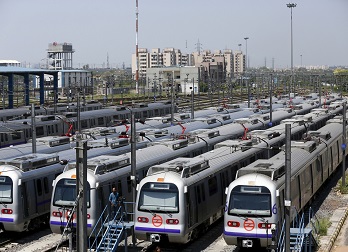

A nudge is any aspect of the choice architecture that alters people’s behaviour in a predictable way without forbidding any options or significantly changing their economic incentives.
– Thaler and Sunstein, Nudge: Improving decisions about health, wealth, and happiness
Transport is the backbone of an economy, and its growth mirrors the economic state of the country. As an economy grows, the requirement of transport infrastructure also increases. The increase in the disposable income of citizens also adds more private vehicles to roads.
Between 2005 and 2015, a considerable proportion of India’s energy-related emissions came from the transport sector. The increase in demand for transport and an increase in the number of private vehicles on Indian roads has played a significant role in escalating emissions from the transport sector from 14.6% in 2005 to 17.8% in 2015.[i]
Amidst growing concerns of increasing emissions and climate change, it is critical that action is being taken to reduce the number of private vehicles on our roads. Fewer private vehicles will not only bring down greenhouse emissions, they will also help tackle the challenge of worsening air pollution that most Indian cities are currently grappling with. Enhancing public transport is often cited as one of the most viable solutions to reduce the number of private vehicles plying on the roads.
But doing so is a challenge. Adopting public transport means adopting a certain way of life that may well be very different from the one people are accustomed to. Asking them to take up public transport means asking them to give up private transport. The reasons for using private vehicles over public transport differ from user to user, and it is essential that we understand these before putting in place strategies for changing vehicle usage patterns. Once usage patterns are identified, behavioural nudge techniques can help the government achieve its goal of increasing the use of public transport.
Many people opt for private over public transport because of the ease and convenience that the former brings. According to a survey by Council For Energy Environment and Water for the report titled How Urban India Moves, first and last mile connectivity is one of the greatest barriers to the uptake of public transport. Simply putting metro or bus infrastructure in place is not good enough because poor or non-existent first and last mile connectivity will nonetheless hinder their uptake. Survey findings also revealed that respondents would be more willing to take up public transport if there was better first and last mile connectivity available to them. This is a concern primarily for people in bigger cities where the public transport is available but isn’t complemented by efficient last-mile connectivity. Better last mile connectivity can be a major first step in nudging the public to take up public transport.
Choice architecture is a big part of successful behavioural nudges. Coined by Richard Thaler and Cass R. Sunstein, the term refers to the practice of influencing choice by “organizing the context in which people make decisions”. Changing travel behaviour is a massive effort and must involve stakeholders from across sectors who can come together to put in place systems that result in making public transport and not private the default choice. Default choices, a backbone of behavioural economic theories, suggest that people are influenced by the defaults set before them by choice architects. Smart ‘defaults’ are a way to nudge people unconsciously towards more environmentally positive options. In a paper on Green Defaults: Information Presentation and Pro‐Environmental Behavior, Pichert and Katsikopoulos (2008) argue that by offering an environmentally friendly source of energy as a default, more people will choose to use and buy green electricity. Ease of access is often an important unconscious consideration when it comes to the consumption and use patterns of individuals.
In the case of public transport, making spaces available to people to make healthier choices, both for themselves and the environment, can influence default uptake of behavior like walking, cycling etc. That people are open to such changes can be inferred from the findings of the How Urban India Moves survey. 90% of the respondents of the survey supported the idea of allocating more road space to pedestrians, cyclists and public transport. The survey results suggest that by merely providing the infrastructure which allows people to take up non-motorized transport can result in an increase in the uptake of non-motorized means of transport. An example of this is Amsterdam, today known as the bicycle capital of the world. Cars far outnumbered bicycles in this Dutch city during the post-war era, leading to numerous traffic casualties of which children were the main victims. Protests and demonstrations finally led to a reconsideration of the car as a main mode of transport. Increased road space was allocated to bicycles which encouraged more people to take it up as a primary mode of transport.[ii]
This is a powerful example of policy change that directly has directly inspired user behaviour. But behaviour can also be influenced through other behavioural insights. Influencing of individual behaviour by influencing social behaviour is a key principle of behavioural economics. What other people do matters when it comes to individual behaviour. “People do many things by observing others and copying; people are encouraged to continue to do things when they feel other people approve of their behaviour,” state Dawnay and Shah in Behavioural Economics: Seven Principles for Policy-Makers. Advocacy and strategic communications can play a significant role in nudging people to take up public transport by placing before them examples of countless others who are taking up public transport to reduce congestion on the roads and improve their environmental conditions. Such social campaigns work by playing on social norms. As pointed out by Schultz et al. in The Constructive, Destructive, and Reconstructive Power of Social Norms, “people measure the appropriateness of their behaviour by how far away they are from the norm, being deviant is being above or below the norm”. For example, energy bills that provide information on how energy efficient their neighbours have encouraged people to use less energy. By influencing the norm on transport and positing public transport as the more laudable choice, policymakers can nudge people towards greater uptake of public transport.
Influencing public transport behaviour through the contextual design of information is another key takeaway that administrators can deploy in nudging people towards public transport. As various papers on behavior change point out, across many contexts, the impact of negatively framed information has consistently been found to be stronger than the impact of the same information framed in positive terms of the same magnitude (Avineri, 2015; Thaler et al., 1997). By framing transport-related carbon emissions in a positive or negative light, the amount of action taken by the public changes. As a paper on valence framing by Avineri and Waygood[iii] finds, framing transport-related carbon emissions in a negative light resulted in participants seeing their contribution differently. For example, saying that the amount of CO2 produced by mode Y is 368g higher (i.e. worse) as opposed to saying that the amount produced by mode Y is 368g lower (i.e. better) made a significant difference in the way participants perceived their carbon footprint. Negative framing is more effective in highlighting the differences between emissions relating to various travel modes and therefore is more likely to influence travel-related choices.
Transport-related carbon emissions as well as their health and environmental impacts are not visible to the eye. This might make relating to climate change and air pollution warnings slightly harder for the public, especially when following the corrective guidelines involves stepping out of the patterns and making major behavior changes that might lead to inconvenience in their daily lives.
Taking steps to make the uptake of desirable behaviors like using more public transport default options without forcing such an uptake upon the public is the most sustainable way of increasing public transport ridership. The purpose of transport is to smoothly integrate itself into the other aspects of our day-to-day activities. This can only be possible when the available transport choices are integrated with human behavior patterns. People will select the easiest options available to them. The goal of our policies and interventions must be to make public transport this option.
Endnotes
[ii]https://www.theguardian.com/cities/2015/may/05/amsterdam-bicycle-capital-world-transport-cycling-kindermoord
[iii] Avineri, E., Waygood, O (2013). Applying Valence Framing to Enhance the Effect of Information on Transport-Related Carbon Dioxide Emissions. https://doi.org/10.1016/j.tra.2012.10.003
References
Avineri, E (2012). On the Use and Potential of Behavioural Economics from the Perspective of
Transport and Climate Change. Journal of Transport Geography, 24, 512-521.
Avineri, E., Waygood, O (2013). Applying Valence Framing to Enhance the Effect of Information on Transport-Related Carbon Dioxide Emissions. Transportation Research Part A 48, 31-38.
Mohan, R., et al. Energy Sector: Methodology Note National & State Level Greenhouse Gas Estimates 2005 to 2015 (2019). GHG Platform India. http://www.ghgplatform-india.org/data-and-emissions/energy/GHGPI-PhaseIII-Methodology%20Note-Energy-Sep%202019.pdf
Pichert, D., Katsikopoulos K.V. (2008). Green Defaults: Information Presentation and Pro-Environmental Behaviour. Journal of Environmental Psychology 28, 63-73.
Soman, A., Kaur, H. & Ganesan, K (2019). How Urban India Moves: Sustainable Mobility and Citizen Preferences. https://old.shaktifoundation.in/wp-content/uploads/2019/10/How-Urban-India-Moves-Report-PDF.pdf.
Schultz, P.W. et al (2007). The Constructive, Destructive, and Reconstructive Power of Social Norms. https://www.jsmf.org/meetings/2008/july/social%20norms%20Cialdini.pdf.
Shah, H., Dawnay, E. (2005). Behavioural Economics: Seven Principles for Policy Makers.
Thaler, R., et al. (1997). The effect of myopia and loss aversion on risk taking: An experimental test. Quarterly Journal of Economics 112, 647–661.
Thaler, R., Sunstein, C (2008). Nudge: Improving Decisions about Health, Wealth, and Happiness.
Zee, R. (2015, May 5). How Amsterdam became the bicycle capital of the world. The Guardian. https://www.theguardian.com/cities/2015/may/05/amsterdam-bicycle-capital-world-transport-cycling-kindermoord