- A clean and secure energy future

Blue Sky Thinking
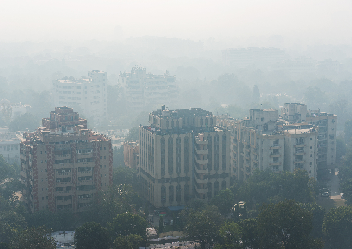
Before we despair at ever seeing blue skies above Delhi by fixing its awful air quality, we must remember that such situations have prevailed in other major cities like London and Los Angeles and have been tackled successfully. This did not happen overnight but took several years working to a thought out comprehensive plan.
What is needed? First a recognition that this is a problem that can be solved if we initiate action now and follow through on a consistent and continuous basis. There needs to be a year-round plan of action and not a series of reactions come Diwali. Secondly the plan must have quantifiable time bound objectives against which progress can be tracked rather than a set of disparate open-ended measures. We have in place National Ambient Air Quality Standards (NAAQS). We need to plan and track results against these standards.
We should also recognize the positive measures that have taken place over the past few years. Many of these need greater focus on implementation and enforcement.
- Introduction of BS IV fuels and a target of 2020 for BS VI fuels.
- Introduction of fuel efficiency standards for passenger cars. These now need to be introduced and enforced for trucks.
- Retiral of petrol and diesel vehicles over 10 and 15 years old in the NCR must be enforced
- Diesel price decontrol reduced the price advantage of using diesel fuel, thereby significantly reducing diesel car sales. Ideally there should be no price differential between the 2 fuels so there is no financial incentive in purchasing diesel fuelled vehicles where petrol options exist. (Note: it takes 10-15 years for the vehicle fleet to be replaced, so we will have older vehicles on the road for a while.)
- There has been considerable progress in expanding the use of LNG and the replacement of kerosene and wood burning for cooking
- The rise of solar mini grids in rural areas enabling the replacement of diesel and kerosene usage
- The beginning of the use of solar water pumps reducing the need to rely on electricity and diesel
- The overall rise of solar and wind powered electricity generation and continuing positive prospects are enabling a reduction in reliance on fossil fuels
- Emission standards for thermal power plants were introduced in late 2015 for implementation in late 2017. These must be enforced, and slippage not allowed. Older inefficient and polluting plants must be shut down if they cannot meet the norms
- The ban of pet coke and furnace oil and a shift to cleaner fuels is necessary and must be enforced
- Brick kilns must not be allowed to operate unless they convert to newer cleaner and more efficient furnace technology
- The 2 peripheral expressways around Delhi have been under construction for 10 years. These must be completed as soon as possible to enable trucks to skirt Delhi and save the city from their transit emissions.
- Introduction of GST has reduced the need for trucks to be idling at toll check posts
While each of these measures makes sense, action must be planned holistically to keep track of the overall progress being made.
But a lot remains to be done.
- Introduction of stricter emission standards for all industries and enforcement by authorities as there are standards for over 100 other industries
- Improve the quality of Environmental Impact Assessments to ensure proper assessment of air quality / environmental impact and the region’s carrying capacity are made and appropriate control measures have been planned for
- Increased technical and administrative capacity of the state pollution control boards and ability for these statutory bodies to operate with greater independence
- Improved AQ forecasting capabilities and greater clarity on emergency response measures so that these kick in before episodes, rather than being introduced as an afterthought
A key area of focus needs to be on the electricity sector and the electrification of transportation, industry and cooking.
Improving grid electricity reliability will immediately result on less reliance on diesel generators.
The Railways have embarked on an ambitious program to fully electrify traction, thereby eliminating diesel traction use. This, combined by the need to facilitate a modal shift of freight away from road transport, will be very beneficial.
The Government has also been looking at significantly electrifying road mobility. We need to look to strengthening the public transport system though greater availability of electric buses, thereby reducing the need for citizens to drive their own 2/4 wheelers. This must be backed by a rational transit oriented development and parking pricing policy so that citizens are nudged to make positive transportation choices. A supportive manufacturing and charging infrastructure must be created over the next few years.
Industry needs to electrify itself as much as possible for heating and other process purposes and move away from furnace oil, diesel and coal. Industry also needs to maximize its reliance of solar and wind generation for its electricity needs.
The existing surplus capacity in electricity generation and the growing installation of renewable electricity should provide impetus to induction cookers in order to improve household air quality.
Beyond power and transportation, there are 3 other key areas which need urgent attention and action.
- Waste
- Agriculture
- Construction and road dust
These sectors all face distinct challenges and require differentiated solutions. A common factor is that appropriate citizen and business behaviour must be incentivized by providing financially viable alternative courses of action. Fines and dictats have limited effectiveness. For example, just banning farmers from burning stubble has not made a difference to famer behaviour. What are needed are technical alternatives that make economic sense for the farmer in order to change behaviour. This applies to waste disposal and construction dust as well. Where dictats are required, effective enforcement must follow, and effective capacity and political will must be in place for this to happen.
Industry needs to be made aware of the policy pathway in advance so that they have time to plan and make necessary adjustments without disruption of production. For example, the ban on pet coke, as desirable and necessary as it is, was enforced with no lead time provided, resulting in disruption to production and employment. That being said, where industry has been given significant lead time as in the case of thermal power plant emission standards or conversion to BS IV, they have failed to make use of the notice provided.
Policy action must be accompanied by greater access to data and increased consumer awareness. This will be possible through installation of a far greater number of air quality monitors and appropriate dissemination of the data collected.
Pollution knows no borders and does not stop at state lines. Recent court driven NCR-centric action is welcome, but this is a nationwide problem and must be tackled accordingly.
While the courts have done an admirable job in announcing ad hoc measures, the executive must develop a comprehensive inter-sectoral long-term policy with specific targets and timelines if we are to see the change that is so urgently required. Even if the MoEFCC and the CPCB become more visibly active, the question of their jurisdiction over activities under control of other Ministries such as Power, Industry, Transport, Urban Development, Agriculture etc. remains. Given the seriousness and complexity of the problem and the urgency of providing solutions, what we may need to consider is the establishment of a policy supremo or czar with the authority and remit to address the problem across jurisdictions.